


| Product CodePS0070 | IMPA Code33.8561 | ISSA Code47.585.61 |
Do Not Close Sign – IMO marine safety sign.
Other sizes on request. Film specifications on the Specifications tab.
| Product | |
| Product code | PS0070 |
|---|---|
| IMPA code | 33.8561 |
| ISSA code | 47.585.61 |
| Sizes | 100 × 300 mm · other sizes on request |
| Film options | |
| Self-Adhesive Vinyl (Non-Glow) | Polymeric PVC with UV laminate. No glow. Up to 5 yrs outdoor. |
| General Purpose Glow Vinyl | 200 µm photoluminescent vinyl, approx. 8 hr afterglow. Not certified – not for marine or escape-route use. Up to 7 yrs outdoor. |
| Marine Glow Vinyl (Class C) | DNV MED Wheelmark, ISO 15370:2021. ≥140 / ≥20 mcd/m² at 10 / 60 min, 28+ hr afterglow. Flame-retardant. Up to 5 yrs outdoor. |
| Marine High Intensity Glow Vinyl (Class D) | DNV MED Wheelmark, ISO 15370:2021. ≥260 / ≥35 mcd/m² at 10 / 60 min, 50+ hr afterglow. Nearly 2× Class C – escape routes, LLL, low-light areas. Flame-retardant. Up to 5 yrs outdoor. |
| Substrates | |
| Self-adhesive | Peel-and-stick onto flat, clean, non-porous surfaces – bulkheads, doors, cabinets, painted steel. Default. |
| Rigid PVC | Light, economical panel for interior mounting. Screw or adhesive fix. |
| Polycarbonate | Impact-resistant, UV-stable – exterior and high-traffic locations. |
| Aluminium | Corrosion-resistant, long-life exterior and deck use. |
| Steel | Heavy-duty industrial mounting; magnet-compatible. |
Full film data sheets, certificates and care instructions on our Materials page.
Do Not Close Sign
The Do Not Close sign is a prohibition notice fitted aboard ships to stop crew from shutting a valve, hatch, door, or switch that must remain open for safety or operational reasons. It is commonly displayed near ventilation dampers, watertight doors held open during cargo work, isolation valves during maintenance, or breaker panels being worked on, where closing the item unexpectedly could trap a worker, cut off ventilation, or interrupt a critical system. Bridge teams, engineers, and deck crew all rely on this sign to flag equipment that has been deliberately left in an open state for a specific reason.
Following the ISO 7010 pictogram format, the symbol shows a black hand pushing a lever or door closed, overlaid with a red circle and diagonal bar on a white background, an internationally recognised graphic that needs no translation for multinational crews. The sign carries IMPA code 33.8561 and ISSA code 47.585.61, the catalogue numbers ship chandlers and marine safety suppliers use to order the correct pictogram without ambiguity. Safety Sign Hub holds this design in stock, allowing vessel operators and procurement teams to place a quick reorder whenever a panel needs replacing during survey preparation.
Typical Locations For This Warning
A Do Not Close sign is often tagged onto a valve or breaker during planned maintenance, warning the next watchkeeper not to restore the system until work is signed off, and it is equally common on fire doors or watertight doors propped open for cargo operations or crew movement during port calls. Engine room teams use it on isolation points where closing a valve prematurely could pressurise a line still being worked on, while deck crew apply it to hatches left open for ventilation during tank cleaning or hot work. Because the warning is often temporary, keeping stock on hand means a fresh sign can be hung as soon as a new isolation is required, rather than crew relying on handwritten notices that weather quickly on an open deck.
Safety Sign Hub manufactures this pictogram from fire-retardant, UV-resistant material suited to prolonged exposure on open decks and in machinery spaces, so the sign does not crack, fade, or peel under tropical sun or repeated saltwater spray. Ink adhesion is tested to resist abrasion from routine cleaning and contact with oils and solvents found in engine rooms. A photoluminescent option is available for compartments where emergency lighting may be limited, so the prohibition remains legible if power is lost during an incident. Consistent ISO panel sizing means the sign lines up neatly alongside other prohibition and mandatory notices already fitted throughout the vessel.
Stock is available as a self-adhesive label for quick application to a valve handle, door leaf, or panel face, and as a rigid panel for more permanent fixing points where a tag-style sign would not survive vibration or weather. Both versions carry the same artwork and IMPA/ISSA reference, so reordering is as simple as quoting the SKU to a chandler. Vessels standardising their onboard signage often add this item to a broader order from the prohibition signs category, covering related notices in a single purchase ahead of dry dock.
Supporting Safe Isolation Practices
Guidance on displaying clear prohibition and hazard signage during isolation work is outlined by regulators such as Safe Work Australia, and applying the same principles at sea helps crews extend shore-based safety culture to the working deck and engine room. Pairing this sign with a vessel’s lock-out tag-out procedure gives a visual layer of protection alongside the physical isolation tag, so anyone passing the equipment understands at a glance that it must stay in its current state. Fleets that keep signage consistent between vessels find crew transfers smoother, since the same visual cue is instantly understood on any ship in the fleet.
During cargo operations or tank cleaning, isolations can be set up and removed several times across a single shift, so many chief officers keep a small supply of Do Not Close signs in the deck store rather than ordering one at a time. This avoids delays when a new isolation point needs marking at short notice, particularly during night operations when a chandlery order cannot be turned around before the next watch. Logging where each sign is deployed, and removing it promptly once work is complete, also prevents confusion for the following watch about which systems are still restricted.
Fitting a do not close sign on valves and access points prevents crew from inadvertently closing systems that must remain open for safe operation. Browse our full range of Prohibition Signs for more IMO-compliant maritime safety signage.
Related products
-
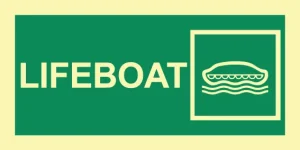
Lifeboat
SKU ES0039Price range: $12.10 through $28.60 inc GST Select options This product has multiple variants. The options may be chosen on the product page -
Exit / emergency use only
IMPA 33.4424ISSA 47.544.24Price range: $12.65 through $59.40 inc GST Select options This product has multiple variants. The options may be chosen on the product page -
Rescue Boat
IMPA 33.4051ISSA 47.540.51Price range: $12.65 through $59.40 inc GST Select options This product has multiple variants. The options may be chosen on the product page -
Davit Launched Liferaft
IMPA 33.4053ISSA 47.540.53Price range: $12.65 through $59.40 inc GST Select options This product has multiple variants. The options may be chosen on the product page -
Liferaft
IMPA 33.4052ISSA 47.540.52Price range: $12.65 through $59.40 inc GST Select options This product has multiple variants. The options may be chosen on the product page





Reviews
There are no reviews yet.