

| Product CodeMS0115-B |
Quiet Please Close the Door Sign – IMO marine safety sign.
Other sizes on request. Film specifications on the Specifications tab.
| Product | |
| Product code | MS0115-B |
|---|---|
| Sizes | 150 × 150 mm, 300 × 300 mm · other sizes on request |
| Film | |
| Self-Adhesive Vinyl (Non-Glow) | Polymeric PVC with UV laminate. No glow. Up to 5 yrs outdoor. |
| Substrates | |
| Self-adhesive | Peel-and-stick onto flat, clean, non-porous surfaces – bulkheads, doors, cabinets, painted steel. Default. |
| Rigid PVC | Light, economical panel for interior mounting. Screw or adhesive fix. |
| Polycarbonate | Impact-resistant, UV-stable – exterior and high-traffic locations. |
| Aluminium | Corrosion-resistant, long-life exterior and deck use. |
| Steel | Heavy-duty industrial mounting; magnet-compatible. |
Full film data sheets, certificates and care instructions on our Materials page.
The Quiet Please Close the Door Sign combines the ISO 7010-style mandatory-action pictogram with a friendly, courteous instruction: “Please close door quietly.” Designed for accommodation corridors, cabin doors, and rest areas onboard vessels, it addresses one of the most common everyday sources of crew disturbance — a door that slams shut during watch changes or late-night movements.
Protecting Rest in a 24-Hour Working Environment
Ships never sleep, but the crew must. With watches rotating around the clock, someone is almost always coming off duty while others are trying to rest, and accommodation doors are used constantly at all hours. A slammed door in a narrow steel corridor carries far more noise than the same action ashore, and repeated disturbances compound fatigue across a voyage. This simple courtesy sign gives every crew member a quiet, constant reminder to close doors gently, without needing a supervisor to intervene each time.
MLC 2006 and Crew Rest Hour Compliance
The Maritime Labour Convention, 2006 (MLC 2006) sets minimum hours of rest for seafarers specifically because fatigue is a well-documented contributor to human-error incidents at sea. Vessel operators are required to record and manage rest hours, but the regulation only protects crew effectively if the physical environment supports genuine, uninterrupted rest. Noise disturbance from doors, footsteps, and general movement in accommodation areas is one of the most preventable causes of rest-hour violations that don’t show up on paper records but still leave crew fatigued. A sign like this is a low-cost, practical measure supporting the spirit of MLC 2006 alongside formal rest-hour tracking.
Placing this sign at the entrance to accommodation blocks, near cabin doors, and at galley or mess room entrances used during quiet hours reinforces a culture of mutual consideration among crew from different watches. It costs nothing to observe and nothing to install, yet consistently reduces one of the more common minor irritants reported in crew welfare surveys aboard working vessels.
A Reminder for Visitors and Contractors, Too
It is not only crew who pass through accommodation corridors during a port call or drydock period — surveyors, contractors, agents, and other visitors unfamiliar with the vessel’s rest routine also use these spaces, often at times that clash with a night-shift crew member’s daytime sleep. A clearly worded sign removes the need for crew to verbally ask every visitor to be considerate, which can feel awkward or be forgotten in a busy working day. Instead, the expectation is set passively and consistently for everyone who passes through, regardless of their familiarity with shipboard routines or their length of time aboard.
A Small Sign With Meaningful Welfare Impact
Crew welfare and mental health at sea are increasingly recognised as safety issues in their own right, since fatigued or frustrated crew make more mistakes and report lower morale over long voyages. Simple, considerate signage that addresses everyday friction points — like noise from doors during rest periods — contributes to a more liveable onboard environment without requiring any procedural overhead or cost beyond the sign itself.
Manufactured in durable, corrosion-resistant material suited to the humid, high-traffic conditions of accommodation corridors, this sign is a simple, permanent fixture that needs no maintenance beyond routine cleaning. It complements our related Please Close Door Quietly Sign for operators wanting consistent courtesy signage across multiple accommodation zones, and pairs well with the wider Mandatory Signs range covering crew welfare and general shipboard conduct.
For background on rest hour requirements protecting seafarer wellbeing, see the ILO’s Maritime Labour Convention overview, which sets out the MLC 2006 framework referenced above.
Specifications
- Mandatory-action pictogram with clear courtesy text
- Durable, corrosion-resistant construction for accommodation areas
- Suitable for cabin doors, corridors, and mess room entrances
- Supports crew rest and welfare alongside MLC 2006 rest-hour management
- Other sizes available on request
Related products
-
Lifeboat
SKU ES0038Price range: $12.10 through $28.60 inc GST Select options This product has multiple variants. The options may be chosen on the product page -
Door opens by pulling left
IMPA 33.4146ISSA 47.541.46Price range: $12.65 through $59.40 inc GST Select options This product has multiple variants. The options may be chosen on the product page -
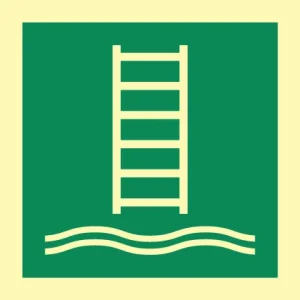
Embarkation ladder
IMPA 33.4054ISSA 47.540.54Price range: $12.65 through $59.40 inc GST Select options This product has multiple variants. The options may be chosen on the product page -
Evacuation slide
IMPA 33.4055ISSA 47.540.55Price range: $12.65 through $59.40 inc GST Select options This product has multiple variants. The options may be chosen on the product page -
Rescue Boat
IMPA 33.4051ISSA 47.540.51Price range: $12.65 through $59.40 inc GST Select options This product has multiple variants. The options may be chosen on the product page





Reviews
There are no reviews yet.