


| Product CodePS0013 |
No Climbing Sign – IMO marine safety sign.
Other sizes on request. Film specifications on the Specifications tab.
| Product | |
| Product code | PS0013 |
|---|---|
| Sizes | 150 × 150 mm, 300 × 300 mm · other sizes on request |
| Film options | |
| Self-Adhesive Vinyl (Non-Glow) | Polymeric PVC with UV laminate. No glow. Up to 5 yrs outdoor. |
| General Purpose Glow Vinyl | 200 µm photoluminescent vinyl, approx. 8 hr afterglow. Not certified – not for marine or escape-route use. Up to 7 yrs outdoor. |
| Marine Glow Vinyl (Class C) | DNV MED Wheelmark, ISO 15370:2021. ≥140 / ≥20 mcd/m² at 10 / 60 min, 28+ hr afterglow. Flame-retardant. Up to 5 yrs outdoor. |
| Marine High Intensity Glow Vinyl (Class D) | DNV MED Wheelmark, ISO 15370:2021. ≥260 / ≥35 mcd/m² at 10 / 60 min, 50+ hr afterglow. Nearly 2× Class C – escape routes, LLL, low-light areas. Flame-retardant. Up to 5 yrs outdoor. |
| Substrates | |
| Self-adhesive | Peel-and-stick onto flat, clean, non-porous surfaces – bulkheads, doors, cabinets, painted steel. Default. |
| Rigid PVC | Light, economical panel for interior mounting. Screw or adhesive fix. |
| Polycarbonate | Impact-resistant, UV-stable – exterior and high-traffic locations. |
| Aluminium | Corrosion-resistant, long-life exterior and deck use. |
| Steel | Heavy-duty industrial mounting; magnet-compatible. |
Full film data sheets, certificates and care instructions on our Materials page.
No Climbing Sign
A no climbing sign is a standard ISO 7010 prohibition pictogram used throughout ships, port terminals and marine facilities to stop unauthorised access to ladders, masts, gantry cranes, hatch coamings, davits and other elevated structures. Instantly recognisable as a red circle with a diagonal bar over a black climbing figure on a white background, this no climbing sign gives crew, stevedores and visitors a language-independent warning that scaling the structure beyond that point is forbidden without proper authorisation, fall arrest equipment and a permit to work.
Falls from height remain one of the most serious hazards aboard vessels and within port operations, and a clearly posted no climbing sign is a simple, low-cost control that reduces the likelihood of an incident before it can occur. On deck, a no climbing sign is typically fitted at the base of masts, funnel structures, external accommodation ladders, crane jibs and cargo gear where an unqualified person might otherwise be tempted to climb for a better view, a shortcut, or to retrieve a dropped item. In port facilities, the same no climbing sign is mounted on quay cranes, conveyor gantries and warehouse racking to keep untrained personnel off equipment that is only safe to access with the correct harness, training and isolation procedures in place.
Manufactured for the marine environment
Safety Sign Hub produces this no climbing sign in a durable, fire-retardant, photoluminescent material engineered to withstand the corrosive salt air, UV exposure and constant vibration found aboard working vessels. The photoluminescent pigment charges under normal lighting and glows in the dark, so the sign remains visible during a blackout, a power failure or dense smoke – exactly the conditions in which crew most need clear guidance around restricted climbing points. The sign complies with ISO 7010 pictogram conventions and supports the general shipboard safety signage practice expected under AS 1319, the Australian Standard governing safety signs for the occupational environment.
Ordering and placement
Ship chandlers, marine suppliers and vessel operators can order this no climbing sign using SKU PS0013 for fast, accurate procurement whenever signage needs replacing during a port call or scheduled maintenance survey. Because the pictogram meets ISO 7010 conventions, a single no climbing sign is understood by multilingual crews without translation, which matters greatly on internationally flagged and crewed vessels. We recommend positioning each no climbing sign at eye level at the point of access – the foot of a ladder, the entrance to a crane cab, or the base of a mast – rather than only at the top, so the warning is seen before a person begins to climb rather than after.
Compliance and durability at a glance
Australian vessel operators and port facility managers are expected to provide safety signage that is fit for purpose, legible in the conditions it will face, and consistent with recognised design conventions. A sign that meets ISO 7010 requirements addresses all three expectations in a single, low-maintenance product. Because it is manufactured from a rigid, weather-stable substrate rather than a printed sticker, it resists cracking, fading and delamination through repeated washdowns, tropical humidity and cold-climate voyages alike, so operators are not left replacing signage every survey cycle. This keeps signage costs lower over the vessel’s life, since a well-made sign remains legible for years of continuous marine service.
When planning where to fit each sign, consider the full range of climbing points on board rather than only the most obvious mast or funnel structure. External ladders leading to monkey islands, crane access platforms, flagstaff bases and the tops of container stacks are all locations where an additional no climbing sign can close a gap in otherwise well-signed vessel areas. Reviewing signage coverage during each dry dock or annual survey is a practical way to ensure no access point is left without the warning it needs.
For further background on how prohibition pictograms are designed and standardised, see the Safe Work Australia guidance on safety signs, which outlines how graphical symbols are selected to communicate hazards clearly regardless of language. Fitting a compliant no climbing sign at every relevant access point is a straightforward step toward a safer working deck and a safer port facility.
Browse our full range of prohibition signs for more IMO-compliant maritime safety signage.
Related products
-
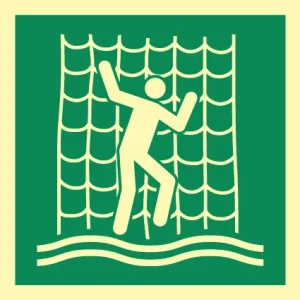
Scramble net
IMPA 33.4989ISSA 47.549.89Price range: $12.65 through $59.40 inc GST Select options This product has multiple variants. The options may be chosen on the product page -
Turn clockwise to open
SKU ES0021Price range: $12.65 through $59.40 inc GST Select options This product has multiple variants. The options may be chosen on the product page -
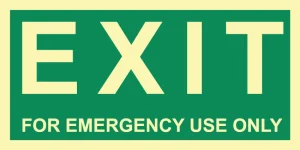
Exit for Emergency Use Only
IMPA 33.4424ISSA 47.544.24Price range: $12.65 through $59.40 inc GST Select options This product has multiple variants. The options may be chosen on the product page -
Assembly Station
IMPA 33.4069ISSA 47.540.69Price range: $12.65 through $59.40 inc GST Select options This product has multiple variants. The options may be chosen on the product page -
Liferaft
IMPA 33.4052ISSA 47.540.52Price range: $12.65 through $59.40 inc GST Select options This product has multiple variants. The options may be chosen on the product page




Reviews
There are no reviews yet.