


| Product CodePS0007 | IMPA Code33.8504 | ISSA Code47.585.04 |
Do Not Touch Sign – IMO marine safety sign.
Other sizes on request. Film specifications on the Specifications tab.
| Product | |
| Product code | PS0007 |
|---|---|
| IMPA code | 33.8504 |
| ISSA code | 47.585.04 |
| Sizes | 150 × 150 mm, 300 × 300 mm · other sizes on request |
| Film options | |
| Self-Adhesive Vinyl (Non-Glow) | Polymeric PVC with UV laminate. No glow. Up to 5 yrs outdoor. |
| General Purpose Glow Vinyl | 200 µm photoluminescent vinyl, approx. 8 hr afterglow. Not certified – not for marine or escape-route use. Up to 7 yrs outdoor. |
| Marine Glow Vinyl (Class C) | DNV MED Wheelmark, ISO 15370:2021. ≥140 / ≥20 mcd/m² at 10 / 60 min, 28+ hr afterglow. Flame-retardant. Up to 5 yrs outdoor. |
| Marine High Intensity Glow Vinyl (Class D) | DNV MED Wheelmark, ISO 15370:2021. ≥260 / ≥35 mcd/m² at 10 / 60 min, 50+ hr afterglow. Nearly 2× Class C – escape routes, LLL, low-light areas. Flame-retardant. Up to 5 yrs outdoor. |
| Substrates | |
| Self-adhesive | Peel-and-stick onto flat, clean, non-porous surfaces – bulkheads, doors, cabinets, painted steel. Default. |
| Rigid PVC | Light, economical panel for interior mounting. Screw or adhesive fix. |
| Polycarbonate | Impact-resistant, UV-stable – exterior and high-traffic locations. |
| Aluminium | Corrosion-resistant, long-life exterior and deck use. |
| Steel | Heavy-duty industrial mounting; magnet-compatible. |
Full film data sheets, certificates and care instructions on our Materials page.
Do Not Touch Sign
Some equipment on a vessel looks safe to handle but is not: hot exhaust lagging, live electrical terminals, moving machinery guards, chemically treated surfaces, or components that are part of a system under test. A do not touch sign gives an immediate, unmistakable warning that a specific item, panel or surface must not be handled, protecting crew, contractors and visitors from burns, shock, entanglement or contamination without requiring them to first understand the technical reason behind the warning.
Following the ISO 7010 prohibition format, this do not touch sign uses a red circular band and diagonal bar over a black pictogram of a hand, set on a white background. Because the graphic itself carries the entire message, a do not touch sign is understood immediately by a multinational crew, a shore-based contractor, or a visiting surveyor, without any dependence on a shared written language.
Typical Uses for This Prohibition Sign
Common applications include hot pipework and exhaust lagging, live switchgear and terminal boxes being worked on, equipment isolated for maintenance but not yet made electrically or mechanically safe, freshly painted or treated surfaces, and instrumentation calibrated for a test that must not be disturbed. AS 1319 calls for prohibition signage to be positioned at the exact point contact might occur, so a do not touch sign should be fixed directly to or immediately beside the item it refers to, not on a general noticeboard some distance away.
Safety Sign Hub produces this do not touch sign in a rigid, fire-retardant photoluminescent material that charges under ambient lighting and continues to glow for hours if power is lost. A glowing do not touch sign remains visible during a blackout or in a poorly lit machinery space, which is exactly when a crew member working by torchlight is most likely to reach for an unfamiliar surface without first checking its condition.
Ordering by IMPA and ISSA Code
Ship chandlers and marine maintenance contractors typically order this signage against IMPA code 33.8504 or ISSA code 47.585.04, ensuring the correct pictogram and format are supplied when restocking a vessel’s engineering and maintenance signage during survey or dry dock. Quoting the code also lets a superintendent standardise this do not touch sign across an entire fleet using one catalogue reference.
Safety Sign Hub supplies this do not touch sign to Australian-flagged vessels, marine engineering contractors, shipyards and industrial sites where equipment isolation and temporary hazards are common. For background on how ISO 7010 prohibition pictograms are structured internationally, see the ISO 7010 standard overview. A correctly positioned do not touch sign is a simple, low-cost control that reinforces isolation procedures and lockout tags during maintenance work.
Engineers issuing a permit to work should treat a temporary do not touch sign as part of the isolation itself, removing it only once equipment has been proven safe and returned to normal service, rather than leaving an outdated warning in place after work is complete. Keeping a supply of both permanent and temporary formats aboard lets the engineering department respond immediately whenever a new hazard is identified during routine maintenance or an unplanned repair.
New crew inductions and toolbox talks should specifically cover what this pictogram means aboard that particular vessel, since a generic understanding of the symbol is not the same as knowing which specific pipework, panel or bench in the engine room currently carries the warning. Recording sign locations in the vessel’s planned maintenance system alongside the associated isolation or hazard note helps ensure the correct signage is reinstated every time equipment is worked on again in future, rather than being forgotten after the first job is closed out.
Browse our full range of prohibition signs for more IMO-compliant maritime safety signage.
Related products
-
Lifeboat
SKU ES0038Price range: $12.10 through $28.60 inc GST Select options This product has multiple variants. The options may be chosen on the product page -
Davit-Launched Liferaft
SKU ES0027Price range: $12.65 through $59.40 inc GST Select options This product has multiple variants. The options may be chosen on the product page -
Scramble net
IMPA 33.4989ISSA 47.549.89Price range: $12.65 through $59.40 inc GST Select options This product has multiple variants. The options may be chosen on the product page -
Rescue Boat
IMPA 33.4051ISSA 47.540.51Price range: $12.65 through $59.40 inc GST Select options This product has multiple variants. The options may be chosen on the product page -
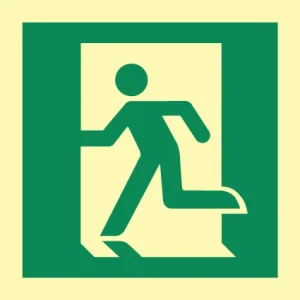
Emergency Exit Left
IMPA 33.4422ISSA 47.544.22Price range: $12.65 through $59.40 inc GST Select options This product has multiple variants. The options may be chosen on the product page





Reviews
There are no reviews yet.